Seller Resource
8 Mistakes That Cost Seattle Condo Sellers Money
I have been involved in hundreds of condo transactions in Seattle. The sellers who get the best results avoid a specific set of mistakes that I see repeated across buildings, price points, and neighborhoods. Most of these mistakes are avoidable with better information and the right guidance.
8
Avoidable Mistakes
$25K–$75K
Typical Cost to Sellers
30+
Extra Days on Market
100%
Preventable
Mistakes That Cost Condo Sellers Money
Here are the ones that show up most often and cost sellers the most money. Each one is preventable with the right preparation and the right advisor.
Overpricing Based on Zillow or Redfin Estimates
Automated valuation models are built for houses. They struggle with condos because they cannot account for floor level, view orientation, unit condition, or building-specific dynamics. A Zestimate might show your unit at $625,000, but if the last three sales on your floor plan closed at $585,000 to $600,000, the algorithm is misleading you.
The only reliable way to price a condo is to analyze in-building comparables and adjust for your unit's specific attributes. I prepare this analysis for every seller, and it regularly differs from automated estimates by 5% to 15%. That gap can mean the difference between a listing that sells in two weeks and one that sits for two months. Read my full guide on how to price a Seattle condo.

Jeff's Take
"I price every listing using in-building comparables and floor-plan-specific adjustments, not algorithms. The difference is typically 5-15%, and that gap is the difference between selling fast and sitting for months."
Hiring an Agent Who Does Not Know Your Building
This is the most consequential decision you will make, and it is where many sellers go wrong. They hire a friend, a family referral, or the agent who sold their house years ago. That agent may be perfectly competent with single-family homes but completely unfamiliar with how condo transactions work, how buildings differ from each other, and what condo buyers actually care about.
An agent who does not know your building cannot speak intelligently about the HOA's financial health, the reserve fund status, recent capital improvements, or how your unit compares to others in the building. Condo buyers ask these questions, and buyers' agents know when the listing agent is guessing. This lack of credibility costs you showings, offers, and ultimately money. Working with a condo specialist is not a luxury. It is a practical decision that directly affects your sale price..
Jeff's Take
"I have profiled 200+ buildings in Seattle. When a buyer or their agent asks about your HOA reserves, special assessments, or building history, I answer with authority, not guesswork. That credibility closes deals."
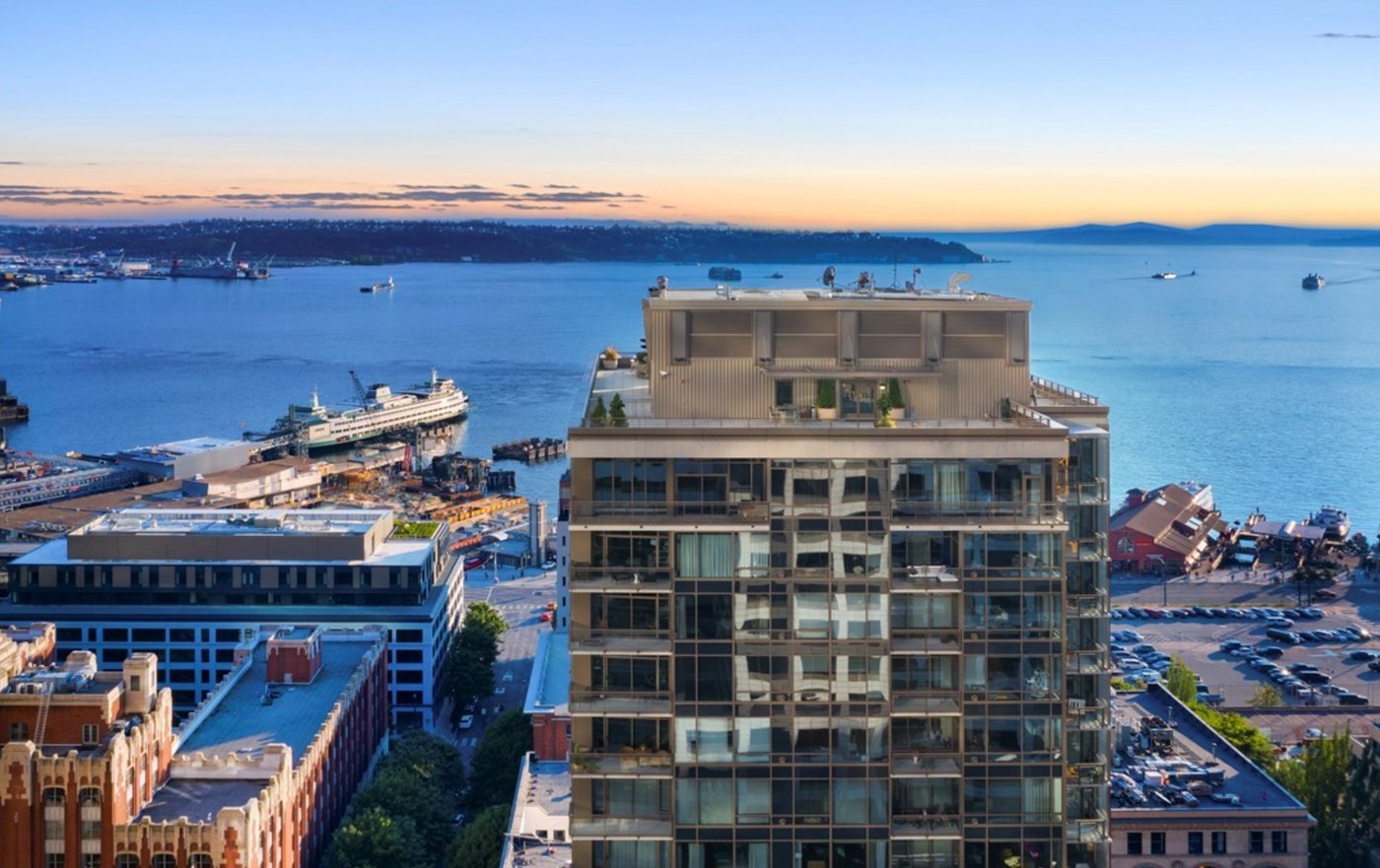
Madison Tower exterior: a complex building requiring specialist knowledge
Ignoring Building-Level Competition
If two other units in your building are already listed, adding yours creates a three-way competition for the same small buyer pool. Buyers will play the units against each other, and prices get pushed down. Many sellers list without checking what else is available in their building, and they end up in a pricing race to the bottom.
Before I list any unit, I review what is currently active, pending, and recently expired in the building. Sometimes the smartest move is waiting two weeks for a competing listing to close. Sometimes it is listing immediately to beat an upcoming competitor. This building-level intelligence is something I provide to every seller, and it directly informs our timing strategy. See how timing strategy works.
Jeff's Take
"I monitor every active, pending, and expired listing in your building before we go live. Timing your listing around in-building competition can mean the difference between multiple offers and a price reduction."
Skipping Staging or Staging Poorly
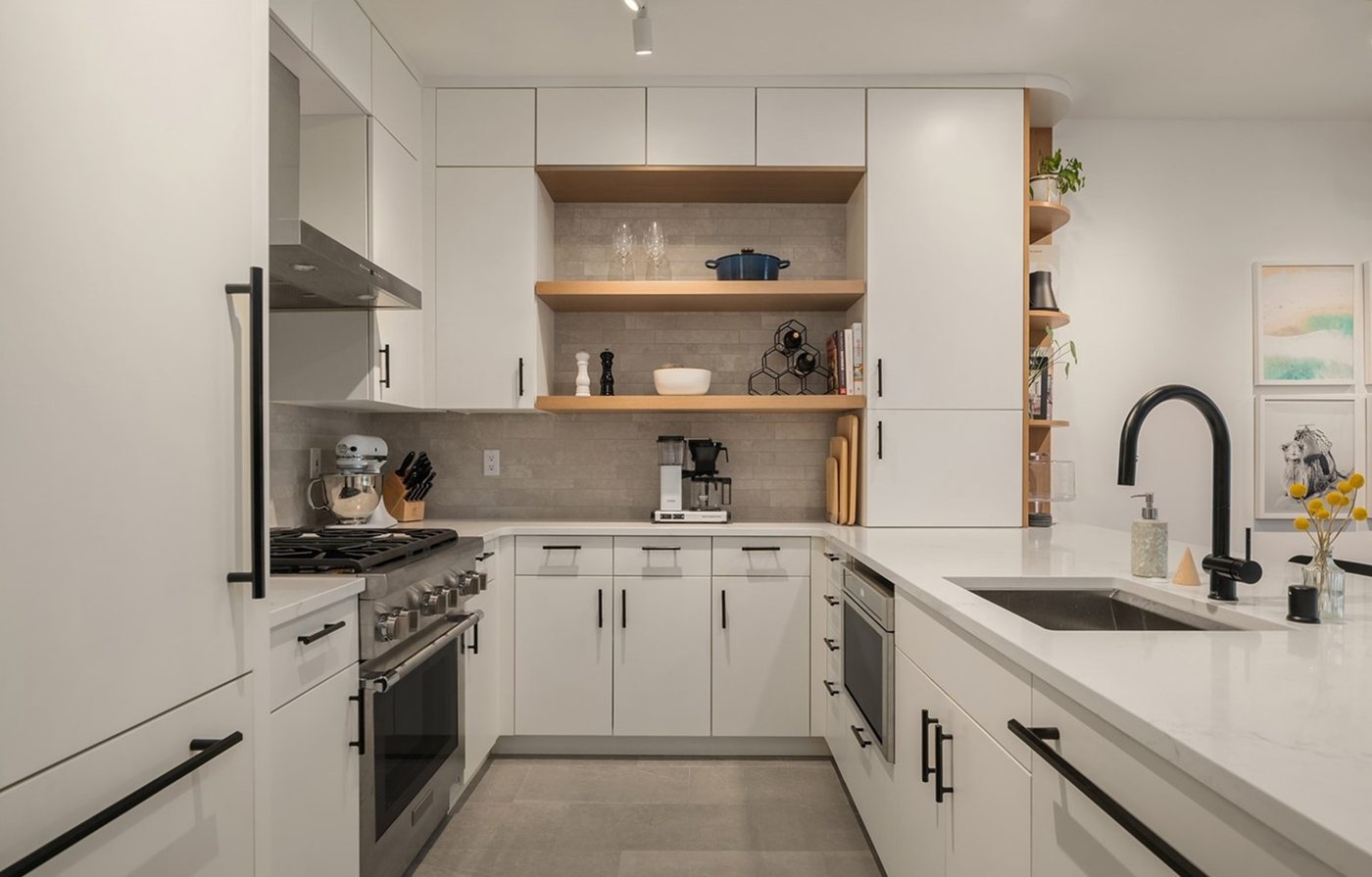
An empty condo photographs badly and shows worse. Buyers cannot gauge scale in an empty room, and small spaces look even smaller without furniture. On the other hand, staging with oversized furniture from a house makes a condo feel cramped and awkward.
The right approach is staging with condo-appropriate, apartment-scale furniture that demonstrates how the space functions. This costs $2,000 to $4,000 and regularly pays for itself in a faster sale at a higher price. If you are going to stage, do it properly with a company that understands compact floor plans. Read the complete staging guide.
Jeff's Take
"Staging a condo is not optional. It is a $2K-$4K investment that typically returns 3-5x in faster sale time and higher price. But it must be done with condo-scale furniture, not house-scale pieces."
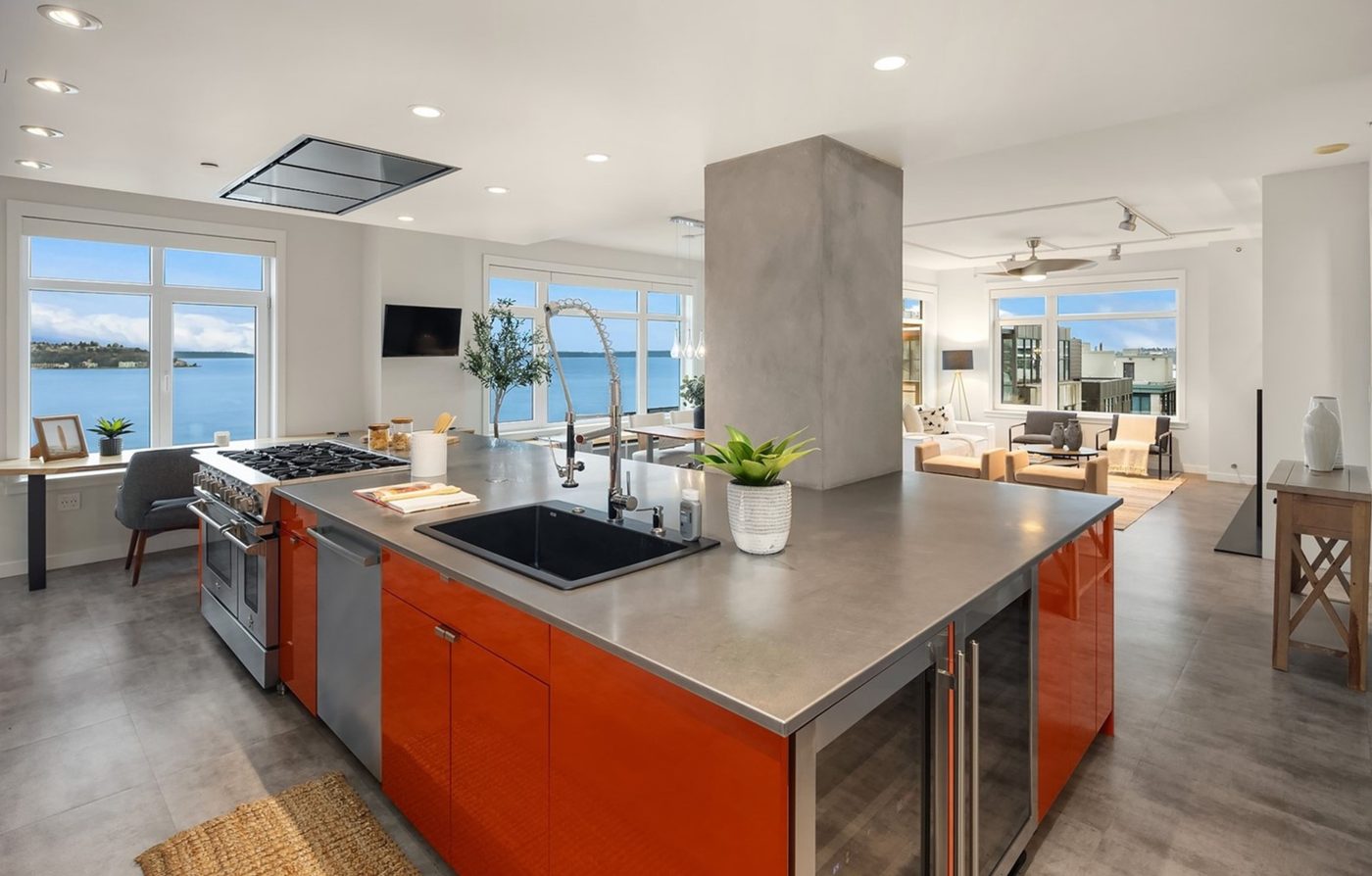
Professionally staged living room with lake views at The Regata, Wallingford
Not Addressing the Resale Certificate Proactively
Washington State requires sellers to provide a resale certificate to the buyer. This document contains the HOA's financial statements, reserve study, special assessment history, insurance details, and governing documents. If there are problems in these documents, buyers will find them, and they will use them to renegotiate or walk away.
Smart sellers order the resale certificate before listing and review it with their agent. If there are issues, you can address them in advance, disclose them proactively, and control the narrative. Sellers who wait until a buyer requests the resale certificate often get blindsided by problems they did not know existed. Learn about the resale certificate.
Jeff's Take
"I order and review the resale certificate before we list, every time. If there are red flags in the HOA financials, I want us to control the narrative, not react to a buyer using it as a negotiation weapon."

The Regata exterior: building-level details matter in resale certificates
Underestimating Closing Costs
Condo sellers in Seattle face closing costs that typically run 7% to 10% of the sale price. This includes Washington's tiered real estate excise tax, agent commissions, title insurance, escrow fees, resale certificate costs, and HOA transfer fees. Sellers who do not understand these costs set unrealistic expectations for their net proceeds and sometimes make poor decisions about pricing or negotiation as a result.
I prepare a detailed seller net sheet at the beginning of every listing engagement so you know your numbers before you commit to anything. See the full closing costs breakdown.
Jeff's Take
"Before we list, I prepare a detailed net sheet so you know exactly what you will walk away with. No surprises at the closing table, every cost accounted for upfront."
Being Difficult About Showings
Condo sellers who restrict showing times, require excessive notice, or are not flexible with access lose buyers. In a competitive market, buyers and their agents will skip listings that are hard to show and move on to the next option. This is especially true in buildings with multiple active listings where the buyer has alternatives in the same building.
I understand that you live in the unit and showings are disruptive. My recommendation is to keep the unit show-ready during the first two weeks on market, when buyer interest is highest, and to be as flexible as possible with access. A lockbox and a clean unit are your best friends during this period.
Jeff's Take
"The first two weeks on market are when 70%+ of serious buyer interest happens. Keep the unit show-ready, use a lockbox, and be flexible. Every missed showing is a missed offer."
Rejecting the First Offer
The first offer on a condo listing is statistically likely to be your best offer. It comes from the buyer who has been waiting for a unit like yours and is ready to act. Sellers who reject a reasonable first offer hoping for something better often watch their listing age and eventually accept a lower price from a buyer who has more negotiating leverage because the listing has been sitting.
This does not mean you should accept every first offer. It means you should evaluate it objectively against the market data, not against an emotional number in your head. I help sellers evaluate offers based on data, not feelings.
Jeff's Take
"The first serious offer is almost always your best offer. I help sellers evaluate every offer against real market data, not emotions, not Zillow, not what your neighbor thinks. Data-driven decisions protect your equity."
Quick Reference
The 8 Mistakes at a Glance
Overpricing from Algorithms
Zillow and Redfin miss floor, view, and building context
Wrong Agent
A generalist cannot sell a condo like a specialist
Ignoring In-Building Competition
Listing blind creates a race to the bottom
Bad or No Staging
Empty rooms photograph badly and show worse
Ignoring Resale Certificate
Buyers will find problems you did not disclose
Underestimating Closing Costs
Seattle condo closing costs run 7-10% of sale price
Restricting Showings
Every missed showing is a missed offer
Rejecting the First Offer
The first serious offer is statistically your best
Next Step
Avoid These Mistakes
Every one of these mistakes is preventable with the right preparation and the right advisor. If you are thinking about selling your Seattle condo, let's have a conversation about your unit, your building, and your goals before you make any decisions.
Weekly Newsletter
Seattle Condo Market Briefing
Weekly insights on Seattle's condo market. Building updates, price trends, and neighborhood intel from 20+ years on the ground.
No spam. Unsubscribe anytime.
Jeff Reynolds
Seattle Condo Specialist · Compass Real Estate · 20+ Years
Jeff Reynolds has spent 20+ years exclusively focused on Seattle's condo market, closing 500+ transactions and personally profiling 200+ buildings. His building-level expertise, grounded in HOA financials, reserve fund health, construction quality, and resale performance, is the foundation of every recommendation on this site. Have a question about selling your Seattle condo?
Authority Resources
Tools for Smarter Condo Decisions
Building Database
200+ buildings with year built, unit counts, HOA data, and neighborhood context.
Condo Market Report
Current price trends, inventory analysis, and neighborhood-level market data.
Condo Glossary
Plain-language definitions for every term a Seattle condo buyer needs.
HOA Fees Guide
HOA fees, reserve funds, financing rules, and the resale certificate explained.
Buildings FAQ
Direct answers about Escala, Insignia, The Luxe, 1521, Newmark, and 200+ buildings.