Seattle Condo Market Report Q1 2026: Downtown Seattle Pivots To A Buyer's Market
By Jeff Reynolds · April 13, 2026
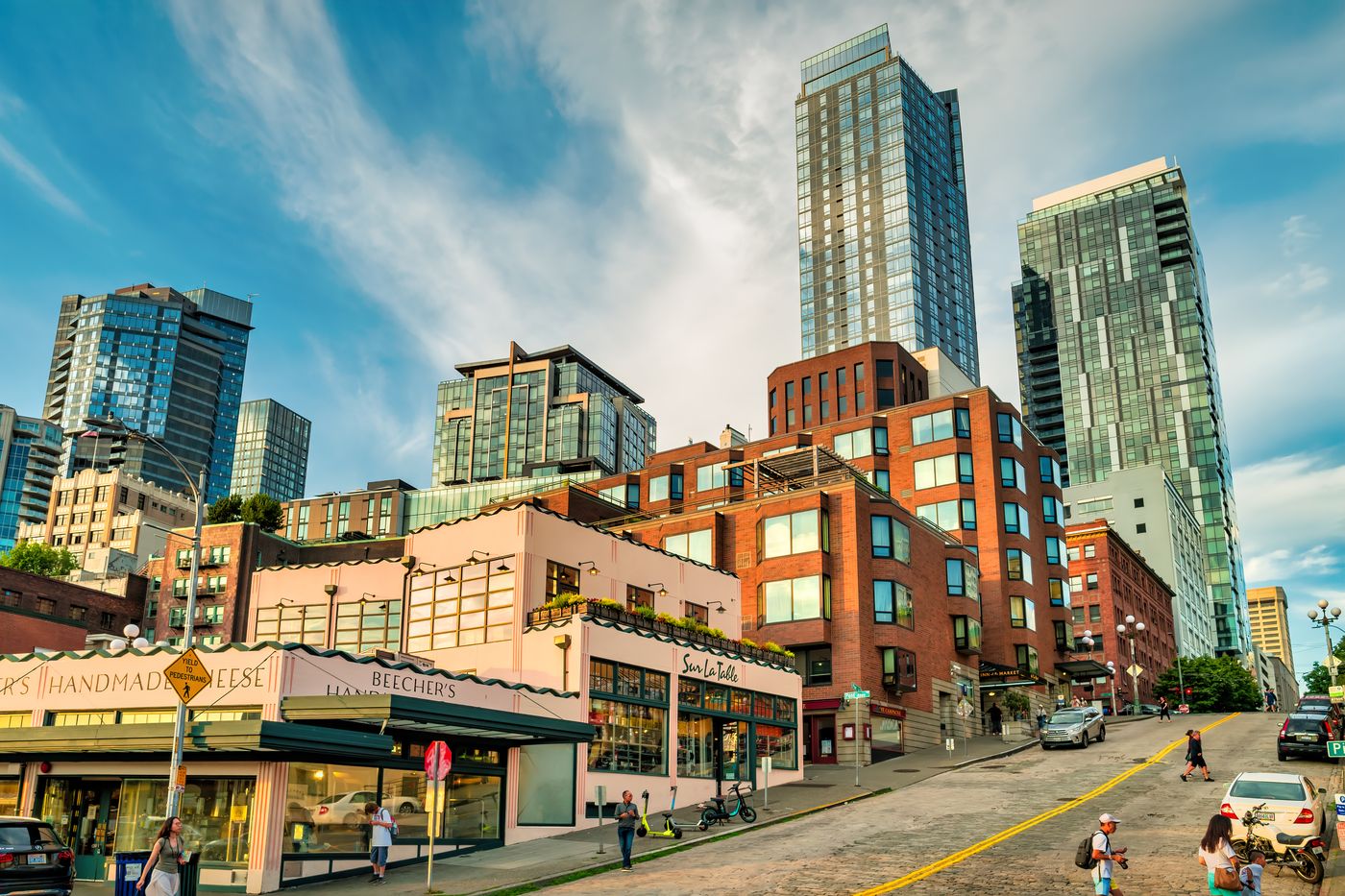
The first quarter of 2026 closed with something Downtown Seattle has not seen in a long time: a real, honest, data-defensible buyer’s market.
I want to be precise about what that sentence means, because the phrase “buyer’s market” gets thrown around loosely and most of the time it is aspirational, not real. This one is real. The NWMLS numbers for Area 701, the Downtown Seattle core submarket, show the median condo price down 12.4% year over year, active inventory up 18.6%, pending sales down 20.5%, and 8.2 months of available inventory at the current pace of sale. Every one of those metrics moved in the same direction, and the direction is buyer leverage.
I have been selling Seattle condos for 20 years. I have closed over 500 transactions across Seattle, Bellevue, and Kirkland. I track 202 buildings in the Seattle Condo Authority Network and review NWMLS data against those buildings every week. What I am seeing in Q1 2026 is the cleanest, clearest buyer’s window I have seen in Downtown Seattle in four years, and I want you to understand why, and what to do about it, before the market starts to correct itself.
A note on sourcing before I go further: every number in this report is pulled from the live NWMLS Area 701 feed on our Seattle Condo Market Data dashboard. That page runs on NWMLS InfoSparks and the NWMLS Communications Tableau Public dashboards, and it updates as new closed sales report. No hand-entered numbers, no quarterly lag, no smoothing. If you want to audit any figure in this post, the raw widget is on the dashboard page.
The Q1 2026 Headline Numbers: Downtown Seattle, NWMLS Area 701
Median sales price: $599,000, down 12.4% year over year. In March 2025 the Area 701 condo median sat at $683,624. Twelve months later it is $599,000. That is $84,624 of median compression (roughly a 12.4% drop) in a single twelve-month window. This is not a noisy monthly reading either. It is the trailing three-month pattern, and the direction has been consistent since mid-2025.
Active inventory: 255 units, up 18.6% year over year. One year ago the same submarket had 215 active condo listings. Today it has 255. Forty additional units of available supply, with new listings still coming online faster than pending sales are clearing. This is the mirror image of the quiet compression story I was telling six quarters ago.
New listings: 104 in March 2026, up 23.8% year over year. Supply is not just elevated. It is being replenished aggressively. More owners are choosing to list in spring 2026 than chose to in spring 2025, which tells you something about how sellers are reading their own building equity positions and timing.
Pending sales: 31, down 20.5% year over year. This is the number that should get the most attention. Pendings are the leading indicator for next month’s closed volume, and they are running a full fifth below prior year. Demand at Downtown Seattle prices is softer than the market is supplying.
Closed sales: 31, down 3.1% year over year. Closings held roughly flat, but the composition of what is closing has shifted. Median square footage on closed units, median days to contract, and sale-to-list ratios have all moved in the buyer’s direction.
Months of inventory: 8.2. This is the single most important number in the report. Months-of-inventory is the ratio between active supply and monthly sales pace. Below 4 months is a seller’s market. 4 to 6 months is balanced. Above 6 months is a buyer’s market. Downtown Seattle is sitting at 8.2 months of condo inventory at current pace. That is not a borderline reading. That is unambiguous buyer leverage territory.
Six numbers. Six different angles. Same direction.
Why This Is Happening
The 12.4% median compression in Downtown Seattle condo prices did not arrive out of nowhere. Three forces are converging, and understanding which ones will persist into 2027 matters more than any individual monthly print.
First, the rate environment is still doing work. Mortgage rates spent most of 2024 and 2025 in the mid-6% to low-7% range, and each tenth of a point pulled more buyers out of their affordability envelope at Downtown Seattle condo prices. The buyers who stayed in the market got pickier, and pickier buyers take longer to commit, which is exactly what the pending sales decline shows.
Second, the Downtown Seattle office vacancy story has finally made its way into buyer psychology. For most of 2023 and 2024, I argued that the condo market and the office market were running on separate tracks. That was true then. It is less true now. Buyers who are shopping Downtown in 2026 are asking harder questions about street-level vacancy, foot traffic, and the pace of the waterfront and stadium-area revitalization. They are discounting for uncertainty. The best buildings are still clearing, but they are clearing at lower prices than they would have a year ago.
Third, building quality is the real dividing line. The 12.4% median compression is an aggregate. Dig into the individual building data and the spread between the best buildings (clean reserves, completed envelope work, no assessment overhangs, pet and rental flexibility) and the weakest buildings (deferred maintenance, active assessments, restrictive bylaws) has widened. Buyers are more informed than they have ever been, and they are pricing that information into every offer they make.
Price Per Square Foot: The Long-Term Signal
Median price is the sticker. Median price per square foot is the underlying value. Both are on the live Area 701 dashboard and I encourage anyone using this post as a decision input to open the widgets and read them directly.
What I can tell you is that the ppsf compression is real but narrower than the headline median compression suggests. Some of the median drop is mix. Smaller, lower-floor, and older-building units are disproportionately what is clearing at the margin, and mix-driven median moves are different from pure-value compression. A buyer who understands the difference between median-price compression and ppsf compression can shop more confidently than a buyer who only reads headlines.
The ppsf widget on the live dashboard updates continuously. Use it the way I use it: as the cleanest apples-to-apples comparison across unit sizes and building types.
What Buyers Should Do Right Now
This is the most selective buyer window I have seen since Q1 2022. I do not say that lightly. The combination of rising inventory, falling pendings, and 8.2 months of months-of-inventory is unusual in a city where condo supply has been structurally tight for most of the last decade.
If you are a buyer with a specific building target, pre-approval, and a realistic view of the current financing environment, here is what I am telling clients this quarter:
- Narrow your building list before you tour. Five to ten target buildings, vetted on paper for reserves, envelope history, rental policy, pet policy, and HOA health. The live Downtown Seattle data is favorable in aggregate, but the aggregate is meaningless if you end up in a building with a $40,000 special assessment six months after closing. Read the HOA financials before you walk inside.
- Make offers at the data, not at the list. With the Downtown Seattle market sitting at 8.2 months of inventory and sale-to-original-list ratios meaningfully below 100%, aggressive-but-defensible offers are clearing. Passive offers at list price are not the discipline this market rewards.
- Move fast on the right unit. Buyer’s markets do not last. The market correction I am describing will eventually pull new supply out of the system as sellers withdraw, delay, or adjust pricing. The best buildings in Downtown Seattle will clear whether the overall market is favoring buyers or not, and waiting for the perfect unit to appear at the perfect price in the perfect building is a way to watch the window close without buying anything.
- Do not confuse Downtown Seattle with other submarkets. This report is scoped to NWMLS Area 701. Capitol Hill, Downtown Bellevue, and Kirkland are running on different dynamics, and I will publish follow-up submarket analyses as soon as the area-specific NWMLS widgets are wired into our live market data dashboard.
What Sellers Should Do Right Now
This is harder. If you are sitting on a Downtown Seattle condo and considering a Q2 2026 listing, you need to reconcile your building equity position with a submarket that has meaningfully softened over the last twelve months. Here is the advice I am giving seller clients:
- Price to the data, not to your hopes. Days on market are extended for buildings that list aggressively above market. Buildings that price correctly at launch still clear. The live % of Original List Price widget on our market data dashboard is the cleanest read on whether the market is agreeing with anyone’s pricing. Launch buildings are clearing meaningfully below their original lists. You do not want to be the seller who spends 90 days chasing the market and ends up at a worse number than you could have gotten on day 14 with correct pricing.
- Invest in presentation. Editorial-level photography, cinematic video, a cleanly staged interior, and a building-specific narrative are not luxury items in a buyer’s market. They are the minimum bid for standing out when buyers have 255 active options to shop. My seller marketing playbook is built around this principle for a reason, and it matters more in Q2 2026 than it has in any quarter of the last three years.
- Understand your building’s story before you list. Every Downtown Seattle building has a narrative. In a softer market, that narrative has to be sharpened and delivered, not assumed. If you cannot articulate in one sentence why a buyer should choose your building over the other 254 active listings, your listing will not either.
- Consider holding if you have flexibility. For sellers without a hard timeline, the right move might be to wait for the next inventory correction. I am not predicting when that happens (the data does not justify a specific timing call), but the 8.2 months-of-inventory reading is unlikely to be the new normal for the long term.
Investor Positioning
The Q1 2026 Downtown Seattle data is an investor’s market, not a seller’s. Mid-rise units in well-managed buildings, with no rental cap, are pricing at discounts that produce meaningfully better rent-to-price ratios than they did a year ago. The investor sweet spot right now is the middle of the condo price range, in a building with clean reserves and rental flexibility, purchased below recent sale comps.
Rental policy is the single most important investor variable. No-cap buildings carry a durable resale premium and, more importantly, protect the investor from being forced to sell if rental economics turn unfavorable. I would not buy a capped building as an investment in Q2 2026 unless the discount to comparable no-cap product is at least 10%.
What This Report Does Not Cover
I want to be explicit about what this post does not do, because the previous version of this report tried to cover too much.
This is a Downtown Seattle (NWMLS Area 701) report only. I have not published neighborhood-level medians for Capitol Hill, South Lake Union, Belltown, Queen Anne, First Hill, or Pioneer Square in this quarterly installment because the live NWMLS data feeds for those areas are still being wired into the market data dashboard. When those feeds are live, each submarket will get its own dedicated quarterly analysis grounded in the same level of data rigor.
This is not an Eastside report. Bellevue, Kirkland, and the broader Eastside condo market have their own dynamics, and those dynamics are meaningfully different from Downtown Seattle right now. A proper Eastside breakout is in the pipeline as soon as the Area 520 NWMLS widgets are embedded.
New development commentary is scoped to verified condo projects. I want to correct something from the previous draft of this report. I had originally grouped Park Row, Bellevue North, and Kanon as three upcoming Eastside condo launches affecting 2027 through 2029 supply. That was not accurate. Kanon is a twin office tower, not a condo project. Bellevue North is rental apartments, not condos. Park Row, Bosa’s 22-story luxury tower at 201 Bellevue Way, is the only true Eastside condo launch of the three, and it remains the single most-watched new condo launch in the region this year. Apologies to any reader of the earlier version who drew a different conclusion. The corrected version is the one I stand behind.
The Outlook For Q2 2026
Three things I am watching between now and the end of Q2:
Rate stability. If mortgage rates hold in the current range or compress modestly, Q2 2026 pending sales in Downtown Seattle will tick back up and the months-of-inventory reading will start to normalize. If rates climb, the buyer’s market deepens.
Seller behavior. The most informative data point in Q2 will be whether new listings continue running 20%+ above prior year or whether sellers start pulling back. A contraction in new listings would be the first sign that the supply side is re-balancing.
Building-level segmentation. The aggregate Area 701 number is useful for orientation, but the real action is at the building level. Best buildings will outperform the aggregate. Weakest buildings will underperform it. The spread between the two will tell you more about the long-term health of the Downtown Seattle condo market than any headline median will.
The One Sentence Version
Downtown Seattle is now an honest, data-defensible buyer’s market. Median down 12.4% year over year, inventory up 18.6%, pendings down 20.5%, and 8.2 months of inventory at current pace. The buyers who act on the right building in Q2 2026 will be looking back at this window two years from now as the one they are glad they caught.
Read the data on our live Seattle Condo Market Data dashboard. Audit the numbers yourself. Then decide what it means for your specific building, your specific timeline, and your specific goal.
Jeff Reynolds is a condo specialist at Compass Real Estate with 20+ years of experience and over 500 transactions across Seattle, Bellevue, and Kirkland. He maintains 202 building profiles and a live NWMLS-sourced market data dashboard at jeffreynoldsseattle.com. Every figure in this report is sourced from the live NWMLS Area 701 feed on our Seattle Condo Market Data dashboard, which runs on NWMLS InfoSparks and NWMLS Communications Tableau Public dashboards. If you want your specific building’s Q1 2026 performance analyzed against its peer group before you list or buy, book a 15-minute consultation or call 206-794-1118.
Further reading:
- Seattle Condo Market Data Dashboard: Live NWMLS Feed. Real-time Downtown Seattle (Area 701) widgets and NWMLS Tableau dashboards.
- The Thing Hiding in Plain Sight: Why the Building Matters More Than Ever
- The Two Skylines: Why Capital Is Choosing Bellevue Over Downtown Seattle
- How to Calculate Absorption Rate in Housing Inventory
Search Condos
Find Your Seattle Condo
Search active listings across Seattle, Bellevue, and Kirkland. Personalized results delivered to your inbox.
Weekly Newsletter
Seattle Condo Market Briefing
Weekly insights on Seattle's condo market. Building updates, price trends, and neighborhood intel from 20+ years on the ground.
No spam. Unsubscribe anytime.
On Instagram
@jeffreynoldsseattle

Jeff Reynolds
Seattle Condo Specialist · Compass Real Estate
Jeff has spent 20+ years helping buyers and sellers navigate Seattle's condo market building by building. Have a question about this topic?